CELTIBERIA ZARAGOZANA MYCOLOGICAL PARK
The Celtiberia Zaragozana Mycological Park, located in the Campo de Daroca region (Zaragoza, Spain), submits its application to the Fungi Friendly Forest® (FFF) Network as an emerging mycological territory in Aragón.
This application arises from the need to diversify the rural economy, conserve forest ecosystems, and valorize local fungal resources. The Orcajo Town Council, with the support of the Government of Aragón, promotes a sustainable management and valorization model for mycological resources.
With a harvestable area of 2,800 hectares, the park represents an opportunity for the regulation, utilization, and promotion of mycological resources in the province of Zaragoza, supported by a management system structured around Decree 179/2014 of November 4, issued by the Government of Aragón, which regulates the collection and use of wild mushrooms in forested areas.
Description of the Mycological Territory
The Celtiberia Zaragozana Mycological Park is located in the southern part of the province of Zaragoza, at an approximate altitude of 900 meters, in the intermediate valley connecting the Meseta with the Iberian System. The climate is dry continental, with cold winters, summers with high temperature variation, and irregular precipitation concentrated in autumn and spring. These conditions allow for timely mushroom fruiting in wet years and favor the presence of species adapted to calcareous soils and discontinuous vegetation cover.
From a forestry perspective, the municipality hosts stands of Aleppo pine (Pinus halepensis) and patches of black pine (Pinus nigra) on hillsides and communal mountains. It features a distinctive Pinsapar (Abies pinsapo), adding uniqueness to the forest environment, as well as oak stands that promote the presence of valuable mushroom species. Shrubby areas of juniper, savin, and rosemary complement the local ecological structure, while valleys and deep-soil enclaves contain sessile oak and oak groves. This vegetal mosaic creates a favorable habitat for species such as Lactarius deliciosus, Marasmius oreades, Agaricus campestris, and some spring species of the genera Morchella and Amanita caesarea.
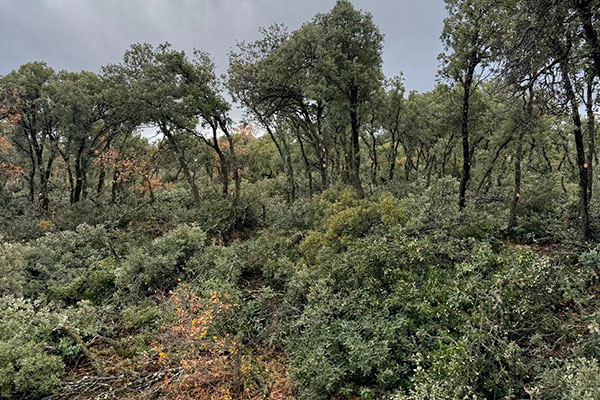
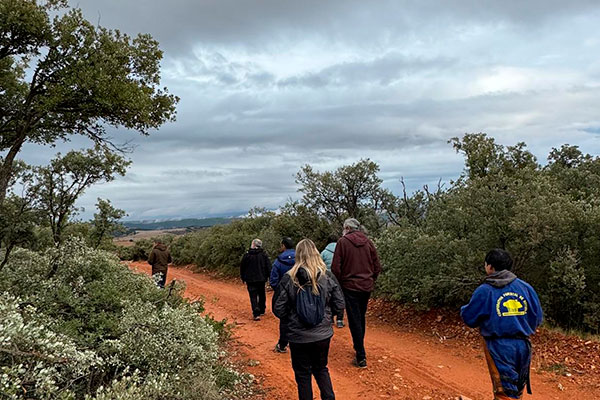
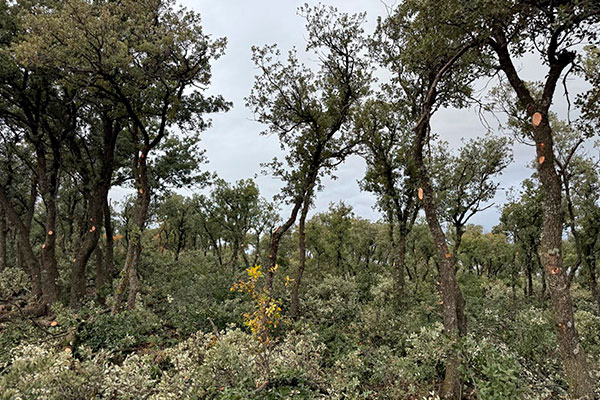
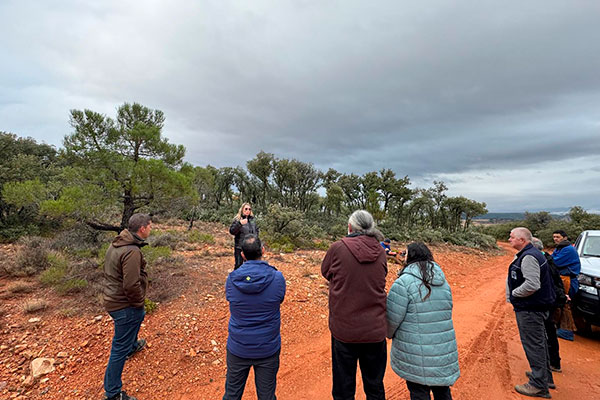
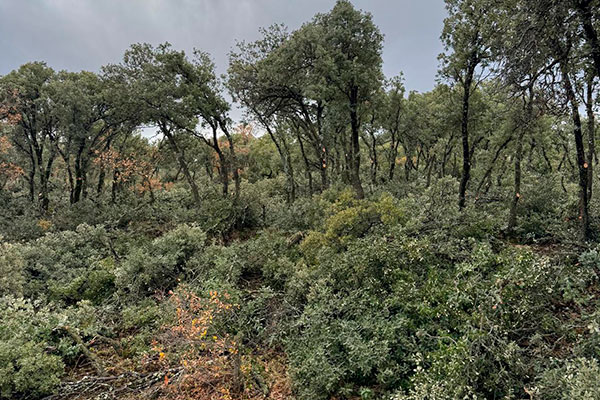
The mycological ecosystem of the Celtiberia Zaragozana Mycological Park is set within a continental Mediterranean territory that combines young Aleppo pine forests with calcareous soils and aromatic shrublands. These conditions favor mycorrhizal species adapted to dry climates and saprophytic fungi associated with pastures and wastelands. Fruiting typically occurs after early rainfall events, with peaks in October–November for Lactarius, March–April for Morchella, and early and late summer for Amanita caesarea in favorable years.
Mycological development in the park is seen as an opportunity for economic diversification compatible with conservation. Orcajo aims to promote low-impact mycotourism, educational programs, interpretive routes, and rural experiences targeted at nearby visitors. Valorizing the forest ecosystems will help strengthen local sense of belonging and improve the management of traditional forest uses.
Downloadable Documents
In this section, you will find downloadable documents containing all the necessary information about the Celtiberia Zaragozana Mycological Park, including governance and management structure, research and innovation, Fungi Friendly Forest (FFF)® criteria, references, and other relevant information.